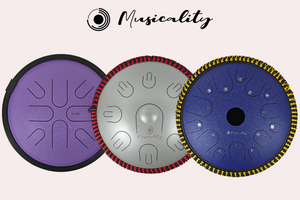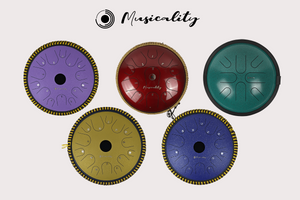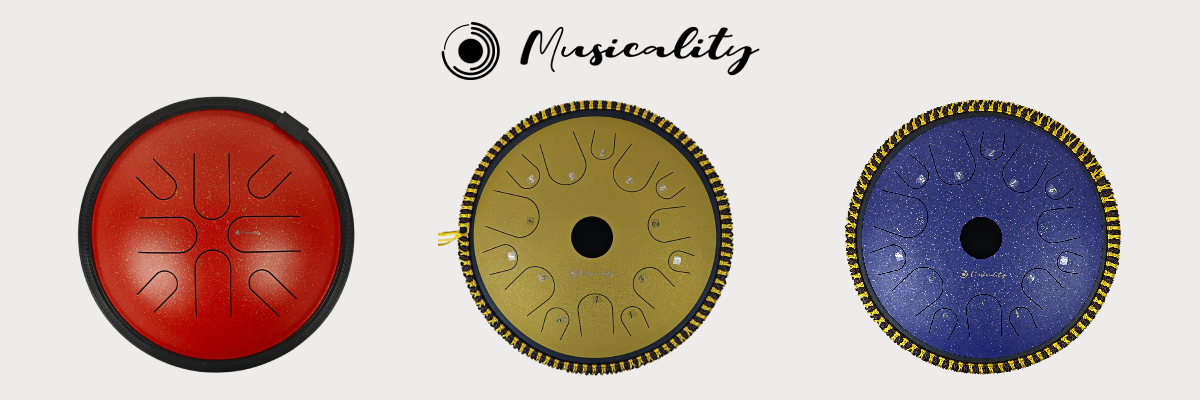
Imagine an instrument that looks like a small spacecraft that has just landed in the middle of a room. With just a gentle touch of its surface using your fingers or special mallets, it produces soft, rich, and almost otherworldly sounds. They simultaneously resemble the ringing of bells, the resonance of a harp, and the whisper of the wind, filling the space with calmness and harmony.
This is exactly how a modern steel tongue drum sounds—an instrument that can now be found in meditation sessions, music studios, creative spaces, and even living rooms around the world. Many people mistakenly believe it is an ancient ethnic instrument with centuries of history. In reality, its journey began quite recently, and the main character of this story was... an ordinary propane gas cylinder.
The story of the steel tongue drum is a perfect example of how human ingenuity, a passion for music, and modern technology can transform a utilitarian metal object into a true musical work of art.
Ancient Ancestors: Wooden Slit Drums
To understand the nature of the steel tongue drum, it is worth first exploring the family of musical instruments to which it belongs.
The steel tongue drum is an idiophone—an instrument in which the sound is produced by the vibration of the instrument's own body. Unlike drums, where a membrane vibrates, or string instruments, where a stretched string creates sound, here the sound emerges from the vibration of the metal itself.
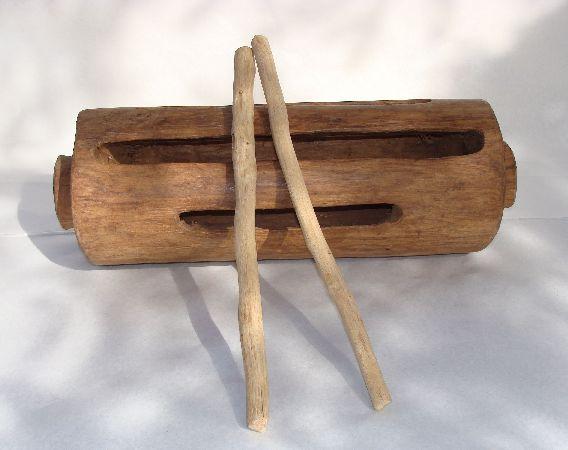
Despite its modern appearance, the concept behind this type of sound has very ancient roots. Some of the earliest similar instruments were wooden slit drums. Archaeologists and ethnographers have found evidence of their use more than 500 years ago throughout Africa, Southeast Asia, and Central America.
Among these instruments, the teponaztli held a special place. Used by the Maya and Aztec civilizations, it consisted of a hollowed wooden body with carefully carved tongues on its upper surface. These tongues vibrated when struck, producing distinctive musical tones. This very concept—the creation of separate resonating sections—would later become the foundation of the modern steel tongue drum.
Therefore, although the instrument itself appeared only in the 21st century, its musical philosophy stretches back through centuries of human history.
Three Steps Toward the Invention: Prototypes from 1990–2005
The true story of the steel tongue drum began only at the end of the 20th century. Three significant inventions paved the way for its creation, each contributing a unique element to the instrument we know today.
Whale Drum: When a Gas Cylinder Sang Like a Whale
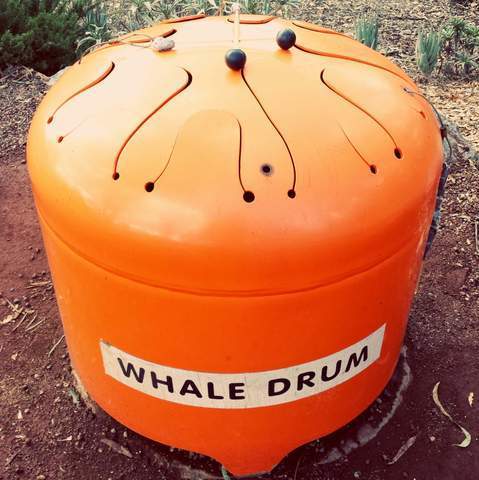
In 1990, American craftsman Jim Doble experimented with old metal cylinders and tanks. His goal was to discover new timbres by repurposing recycled materials.
By cutting various shapes into the metal surface, he produced remarkable sounds that resembled the songs of whales in the open ocean. This experiment led to the creation of the Whale Drum.
Although its design was still far from that of a modern steel tongue drum, it introduced the idea of using a metal cylinder as a fully functional musical resonator.
Hang Drum: A Revolution from Switzerland
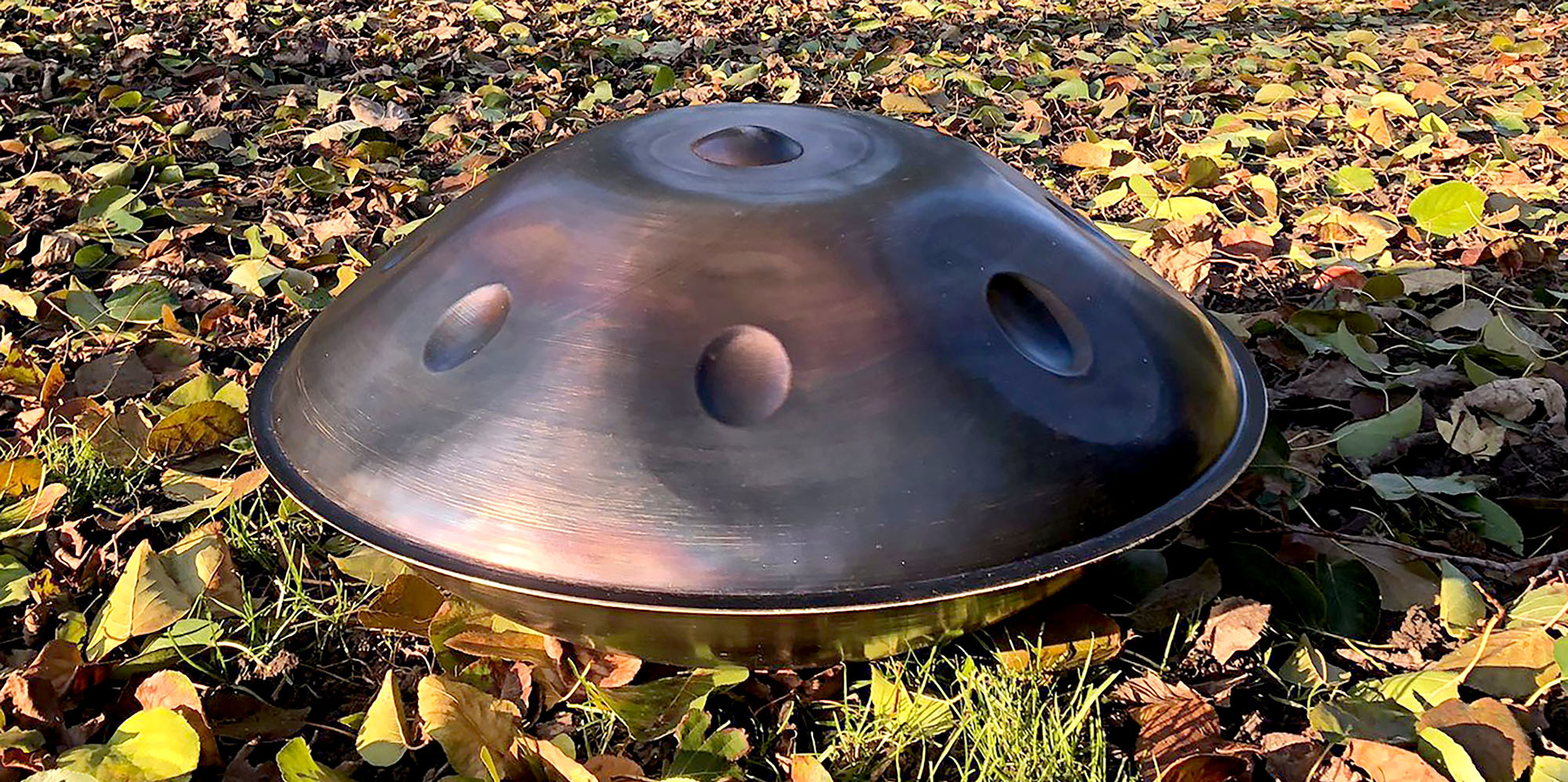
The next major milestone arrived in Switzerland in 2001. Instrument makers Felix Rohner and Sabina Schärer introduced the world to the Hang Drum, known today to many as the handpan.
Its UFO-like shape, circular arrangement of notes, and extraordinarily melodic sound quickly captured the attention of musicians around the globe.
The Hang demonstrated that a percussion instrument could be much more than a rhythmic tool—it could become a complete melodic instrument for personal expression. Its appearance and note layout would later inspire many future steel tongue drum makers.
Tambiro: The Final Piece of the Puzzle

In 2005, musician and inventor Felle Vega introduced an instrument called the Tambiro.
Like earlier experiments, it used a metal cylinder as its foundation. However, its defining feature was a set of precisely cut metal tongues capable of producing clearly defined musical notes.
The Tambiro proved that a tongue-based design could work exceptionally well on a metal body and could serve as the basis for an entirely new type of musical instrument.
Only one step remained before the steel tongue drum would finally emerge.
Dennis Havlena’s Eureka Moment (2007)
In February 2007, American musician and inventor Dennis Havlena decided to combine the best ideas of his predecessors.
He was inspired by the shape and musical concept of the Hang Drum, as well as the tongue-based construction of the Tambiro. The result was an instrument that is now widely recognized as the first true steel tongue drum.
The name Hank Drum was created by combining two words: Hang and Tank.
To build the first instrument, Havlena used a standard 20-pound propane cylinder weighing approximately nine kilograms. He removed the bottom, cleaned the body, and cut seven to ten tongues radiating outward from the center.
The most challenging part was tuning. Each tongue behaved like an independent vibrating plate, meaning that pitch depended on the length and shape of the cuts. For fine adjustments, Havlena used neodymium magnets to alter the resonant properties of the metal.
Pentatonic scales quickly became especially popular because they allowed even people with no musical training to create pleasant and harmonious melodies.
The internet rapidly spread plans for the new instrument throughout DIY communities, and within just a few years, enthusiasts around the world began building their own versions of the Hank Drum.
Modern Evolution: From Garage Workshops to High-Tech Manufacturing
The first steel tongue drums were literally built in garages using discarded gas cylinders. Today, however, the industry has evolved dramatically.
Modern manufacturers have largely abandoned old tanks and cylinders. Instead, they use specially prepared metal blanks made from high-carbon steel, stainless steel alloys, or nitrided steel. These materials provide greater tuning stability, longer sustain, and improved durability.
Another major advancement has been the transition to laser cutting. While early tongues were cut by hand, modern high-precision laser systems allow manufacturers to achieve nearly perfect geometry for every note. This significantly improves tuning accuracy and overall musical performance.
Modern tuning methods have also advanced considerably. Craftsmen now rely on professional tuning equipment, spectral analysis, and specialized acoustic tools to achieve exceptional sound precision.
Aesthetics have become another important aspect of the instrument's evolution. While early steel tongue drums often looked like repurposed industrial objects, modern models frequently resemble genuine works of art. Artistic heat treatment creates unique color transitions, intricate engravings add personality, and multi-layer protective coatings preserve and enhance the beauty of the instrument.
This is precisely the philosophy behind modern Musicality steel tongue drums. They combine the precision of contemporary manufacturing technologies, carefully selected musical scales, and elegant designs that transform the instrument into both a source of music and a striking decorative piece.
The story of the steel tongue drum dispels the common myth that it is an ancient traditional instrument. In reality, it is one of the youngest instruments in the modern musical world. Its creation resulted from the fusion of centuries-old slit drum traditions, the creativity of passionate inventors, and the technological innovations of the 21st century.
From an old propane cylinder to a highly sophisticated musical instrument with perfectly tuned notes, the journey of the steel tongue drum is truly remarkable. Today, it continues to captivate musicians, meditation practitioners, and anyone searching for new ways to connect with sound.
If you would like to experience the magic of this instrument for yourself, now is the perfect time to explore the Musicality steel tongue drum collection and discover a model that will open the door to a world of harmonious and meditative melodies.